


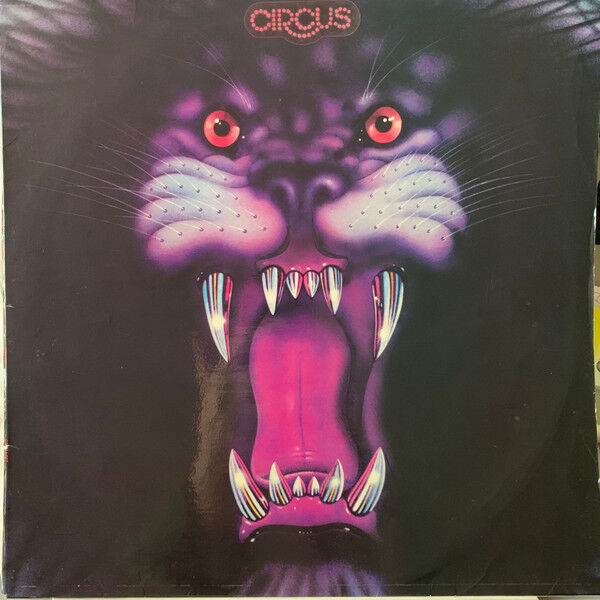
*STOCK IMAGE USED*
Description
Circus ruled in South Africa's wildcat club culture of the mid-1970s - an original band, with a theatrical approach to their songwriting in the ballpark of David Bowie, Elton John, and New York's Lou Reed and Iggy Pop. Not that they were copying anyone. It's just that when the pop market is on a roll, bands bounce off one another as they follow the momentum. That's when unknowns can break into the big time every week with their own twist on what's happening. That was Circus's edge. Everything they touched in their glorious 30-month run from 1976-8 set a new level of excitement in the biggest clubs of the Reef and the Coast. They stayed true to themselves, and wound up broken by the SABC's Tannie morality and the profit motive of the record companies. But they showed the way in the time of massive change in the music market. The Windrich brothers of éVoid and Jonathan Selby of Petit Cheval were regulars at Circus jams. In the pre-Punk era maybe Circus were South Africa's New Romantics. They were professional musicians, all under 23, with unshakable faith that they had what it takes to get to the top of the world charts. And in 1978 they proved it. Circus musicians arranged and backed the "all girl" group Clout's first single, Substitute; within months it was vying for the Number One slot throughout Europe with the Grease movie anthem, "You're the one that I want". "Substitute" sold nine million copies - hell, it sold around 250 000 in South Africa alone, as popular in Soweto and Mitchell's Plain as it was in Sandton and Booysens. The Life was good and everyone could afford to be generous. Producer Grahame Beggs had the local rights for the string of 70s Abba hits, and he signed up Circus and Clout to pursue local success in similar glitter outfits. But when Clout's first single became the instant dance sensation of Europe's summer of '78, not everyone's priorities remained on the same page. Making money takes precedence over making music, and Circus were sidelined by the same kind of greed that prevailed when another form of gold had put Jo`burg on the map a century earlier. Which is sad, because Circus deserved an even break. And if they'd got it, this 1977 album shows they had original material for at least three singles. Long Legged Lady, Stupid Boy and Speed Queen were all club favourites, and all original songs. They each took a different approach to commercial hit formulas - in the manner of Lennon-McCartney's Sergeant Pepper album, or Brian Wilson's Pet Sounds, or the Tim Rice-Andrew Lloyd Webber rock operas. FUN FACT 'Conquistador' is a brilliant cover version of the Procol Harum classic.
Preowned
CD
Circus
Circus
Fresh Music
Super rare Sole/First CD press of the sole full length from the South African Prog/Art group originally released in 1977 as In The Arena
$20.00
Sold out. Let us know you’re interested.
Description
Circus ruled in South Africa's wildcat club culture of the mid-1970s - an original band, with a theatrical approach to their songwriting in the ballpark of David Bowie, Elton John, and New York's Lou Reed and Iggy Pop. Not that they were copying anyone. It's just that when the pop market is on a roll, bands bounce off one another as they follow the momentum. That's when unknowns can break into the big time every week with their own twist on what's happening. That was Circus's edge. Everything they touched in their glorious 30-month run from 1976-8 set a new level of excitement in the biggest clubs of the Reef and the Coast. They stayed true to themselves, and wound up broken by the SABC's Tannie morality and the profit motive of the record companies. But they showed the way in the time of massive change in the music market. The Windrich brothers of éVoid and Jonathan Selby of Petit Cheval were regulars at Circus jams. In the pre-Punk era maybe Circus were South Africa's New Romantics. They were professional musicians, all under 23, with unshakable faith that they had what it takes to get to the top of the world charts. And in 1978 they proved it. Circus musicians arranged and backed the "all girl" group Clout's first single, Substitute; within months it was vying for the Number One slot throughout Europe with the Grease movie anthem, "You're the one that I want". "Substitute" sold nine million copies - hell, it sold around 250 000 in South Africa alone, as popular in Soweto and Mitchell's Plain as it was in Sandton and Booysens. The Life was good and everyone could afford to be generous. Producer Grahame Beggs had the local rights for the string of 70s Abba hits, and he signed up Circus and Clout to pursue local success in similar glitter outfits. But when Clout's first single became the instant dance sensation of Europe's summer of '78, not everyone's priorities remained on the same page. Making money takes precedence over making music, and Circus were sidelined by the same kind of greed that prevailed when another form of gold had put Jo`burg on the map a century earlier. Which is sad, because Circus deserved an even break. And if they'd got it, this 1977 album shows they had original material for at least three singles. Long Legged Lady, Stupid Boy and Speed Queen were all club favourites, and all original songs. They each took a different approach to commercial hit formulas - in the manner of Lennon-McCartney's Sergeant Pepper album, or Brian Wilson's Pet Sounds, or the Tim Rice-Andrew Lloyd Webber rock operas. FUN FACT 'Conquistador' is a brilliant cover version of the Procol Harum classic.